
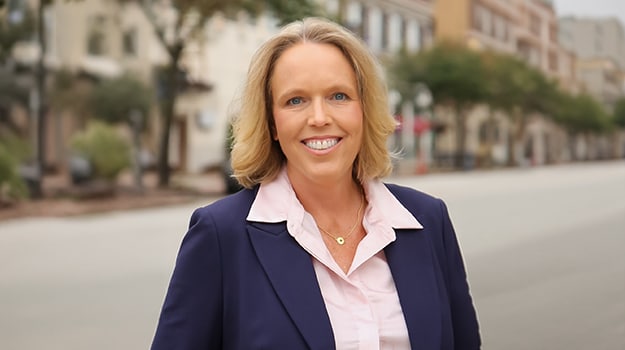
Wendy Hilton-Morrow
President and CEO, United Way Quad Cities
With all due respect to Halloween, I have never liked horror films or slasher pics, so I’m especially dismayed when strangers decide to drop a dozen 30-second horror flicks into my quiet evening of television viewing.
Let’s face it: campaign ads are among the scariest things on TV right now. One candidate is radical. Another doesn’t care about farmers. Someone wants to defund the police, while someone else is only in it for financial gain.
I understand why campaigns use these messages. Negative information gets our attention and tends to stick with us, and candidates operate in a system that rewards them for drawing sharp distinctions between themselves and their opponents.
The problem comes when the rest of us begin to believe those distinctions tell the whole story.
National politics rewards conflict. If you judged America only by campaign ads, cable panels, and the daily combat on social media, you might conclude that we share almost nothing except fear and frustration. But one of the divides worth paying attention to is the gap between a national conversation that magnifies our differences and the local work that still asks us to solve common problems together.
Americans may argue fiercely about the White House and the state house, but we have not stopped agreeing about the basic obligations of a decent community: children should have a fair start, work should provide stability, illness should not produce financial ruin, and neighbors should not be left to navigate crisis alone. Walk into a school conference, a food pantry, a job-training class, a health clinic, or a United Way partner agency, and the picture of a fearful, divided America begins to look different.
If you don’t trust my experience or your own, then listen to the researchers who are looking at Americans beyond the fury of elections. There is a strong, shared sense of who we want to be and what kind of world we want to leave to our children and grandchildren that can be obscured by the headline-grabbing conflicts.
On education, polls find overwhelming agreement among Republicans, Democrats, and independents that every child deserves the support necessary to learn to read. On work and financial security, they find broad support across political parties for expanding apprenticeships and creating more opportunities for work-based learning. On health care, majorities across party lines recognize affordability as a serious problem.
That makes sense, because most of us understand what it means when a family puts off a doctor’s appointment because of the cost, has an adult child whose most affordable health care option is simply not getting sick, struggles to find mental health care for a child, or worries that one health crisis could also become a financial crisis.
Education, financial security, and access to health care are the three areas around which we organize our work at United Way Quad Cities, and one of the things I see in this work is how regularly people who may vote very differently come together around them. Employers, educators, union members, health care professionals, nonprofit leaders, volunteers, donors, and elected officials sit at the same tables because they care about many of the same things.
So how can each of us express our own hopes for a better, stronger, and more visibly caring Quad Cities?
First, lift your voice, but don’t raise it. Vote, pay attention to the candidates, ask hard questions, decide what matters to you, and make your voice heard. Democracy depends on disagreement, and there is nothing wrong with caring deeply about the choices in front of us. But disagreement does not require us to assume the worst about people who come to a different conclusion.
Second, extend a little grace to yourself and to others. The next time you find yourself behind a car with a bumper sticker that makes you roll your eyes, consider what you might have in common with the person driving it. Chances are pretty good that both of you want children in the Quad Cities to succeed, want people who work hard to be able to build a good life, and want your families to be healthy and safe, even if that driver did just cut you off trying to get to work on time.
Finally, join what researchers at More in Common call a “Connection Cascade.” Their research found that positive experiences connecting with people who are different from us can make us more interested in doing it again, and Americans are especially interested in connecting across differences when they are working together toward a shared goal that improves their community. So volunteer at a school, help at a food pantry, serve on a neighborhood committee, or join a community project where the person working beside you may see the world differently but still wants the same thing accomplished.
Halloween will soon come and go for another year, as will the attack ads currently haunting our television screens. What will remain are the children we need to educate, the families we want to see thrive, and the community problems none of us can solve alone.