
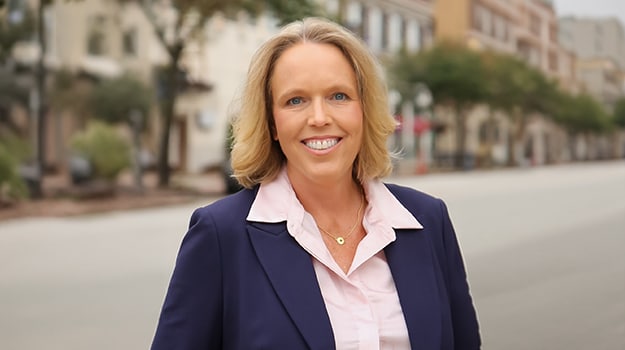
Dr. Wendy Hilton-Morrow
President and CEO, United Way Quad Cities
When I was five years old, my kindergarten teacher, Mrs. Wells, asked me to keep a secret.
She was sending a book home with me to read, but I wasn’t supposed to tell the other children. They weren’t quite ready to start reading, she explained, but I was. I still remember carrying that book home in my bag on the school bus, feeling pretty special.
Looking back, I suspect Mrs. Wells may have been doing something similar with other students. But it didn’t matter. She recognized that I was ready for something more, and her confidence in me made me feel capable.
Mrs. Wells was the first of many teachers, from kindergarten through college, who recognized potential in me and helped me develop it. I suspect many of you had a Mrs. Wells in your life, too – a teacher who believed in you before you fully believed in yourself.
Those early experiences matter. A review of 22 studies found that children who attended high-quality preschool were about 11 percentage points more likely to graduate from high school. Children who aren’t reading proficiently by the end of third grade are four times as likely to leave high school without a diploma. The foundations for future opportunities are laid earlier than we sometimes realize.
With Thanksgiving approaching, Etsy and our inboxes are overflowing with “thank a teacher” gifts. But what do teachers really need from us?
A recent Gallup study found that feeling appreciated is the strongest factor in whether educators feel they matter at work. Yet only 35% of K–12 educators say they matter a great deal at their schools, and one in four says they’re likely to leave their current position within the next year. As troubling as those findings are, they shouldn’t surprise us. Teachers are asked to teach while also helping children navigate hunger, housing instability, absenteeism, mental health concerns, and other challenges that interfere with learning.
So how can we do more than say thank you?
First, become educated on education.
That was one purpose of United Way Quad Cities’ State of Education event last week, where we shared findings from the Quad Cities Education Data Exchange, a United Way partnership with St. Ambrose University and local school districts, which tracks educational progress across the region. We also shared national student assessment data and local workforce data gathered in partnership with Grow Quad Cities. The data shows both reasons for pride and reasons for renewed efforts.
Our high school graduation rate is 93%, two percentage points above the national average, and preschool enrollment also outpaces the national average. But only 30% of our fourth-graders are proficient in reading, and 30% of eighth-graders are proficient in math. Those results match national averages, but that doesn’t make them reassuring.
The connection between early educational outcomes and later educational attainment and earnings was the focus of our State of Education panel, which brought together representatives from higher education, industry, and organized labor to discuss what these milestones mean for the Quad Cities workforce. A strong education helps our economy, certainly. Just as important, it helps children grow into adults who can find meaningful work, support their families, and enjoy their lives.
Second, we can recognize that schools can't do this work alone.
We have nonprofits and other organizations throughout the Quad Cities helping families with food, health care, mentoring, and other needs. The challenge is connecting that support with the children who need it.
That’s the idea behind United for Schools. Working with school districts and community partners, we’re helping over 2,700 students across six schools in four districts. The early results are encouraging: Third-grade reading proficiency improved at four of five participating schools, with an average gain of 7%. Fourth-grade math proficiency increased by 3% across five sites between fall and spring. Through the collective impact of teachers, administrators, non-profit partners, and our United for Schools team we’ve also seen improvements in attendance and behavior at individual schools. We need more time to know what will last, but there’s reason for optimism.
Third, we can back up our appreciation with action.
There are plenty of ways to make a difference, and some require surprisingly little time. Through Read United, volunteers spend just 30 minutes a week reading with elementary students. There are also one-time and ongoing opportunities at United for Schools sites. Visit our Volunteer Hub or call our Volunteer Engagement Manager at 563-344-0346.
You can also call your own neighborhood school and ask what would help. If volunteering isn’t possible, consider giving to United Way, a local school foundation, or another organization supporting children.
I don’t know whether Mrs. Wells remembers giving me that book all those years ago. What probably seemed like a small gesture to her has stayed with me for almost 50 years. I still remember how it felt to have a teacher believe in me.
To my Mrs. Wells, and all the Mrs. Wellses out there: thank you. You matter, and the difference you make can last a lifetime.
I also know, though, that you need more than our gratitude. You need our help. And, united is the way we can be here for you, just as you were there for us.