
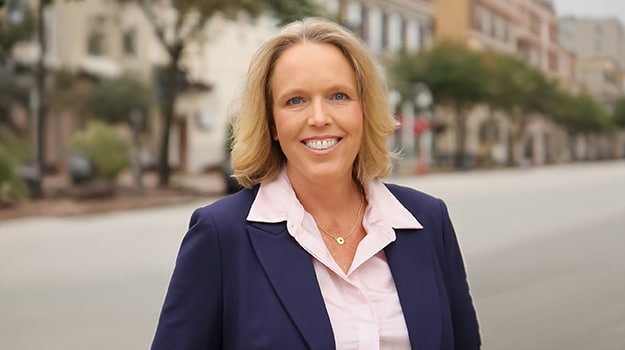
Wendy Hilton-Morrow
President and CEO, United Way Quad Cities
We’ve weathered a lot of storms in the Quad Cities this summer, and forecasters predict we’re not out of the woods.
I spent the early years of my career as a television reporter in this community, and I covered my share of storms and their destruction. One thing I could always predict was the hopeful scenes in the immediate aftermath of those storms. Neighbors checked on neighbors, and people who owned chainsaws seemed to know exactly where they were needed.
I’ve thought about that more than once this summer. As a life-long Quad Citian, it’s something I’ve always appreciated about our community. When something goes wrong, people show up.
Last month, they did it again when a very different kind of storm hit more than 2,500 Quad Cities families: Tyson Foods announced it was closing its plant in Joslin.
And people showed up.
Social media quickly filled with job openings and offers of assistance. Nonprofits connected families with food, housing and help paying utility bills. Workforce organizations brought together more than 100 employers for a job fair at Vibrant Arena. Organizations like QCAIR, Palomares, Tapestry Farms and World Relief continue to coordinate support for immigrant families, who were disproportionately affected by the closure. And union leaders have served as critical partners in many of these rapid response efforts.
Those are only a few examples. There are far more efforts than I could possibly name here.
But there’s something else I learned from covering storms: Cleaning up the damage takes a lot longer than the storm itself.
That’s what I’ve been thinking about as we passed the one-month mark since the Tyson announcement. Where are those families now? How many have found jobs? How many are struggling to pay their bills? How many are wondering whether they can afford to stay in the Quad Cities?
And it has me thinking about a bigger question: What does it mean to be a caring community not just in the days after the storm, but in the months and years that follow?
Earlier this month, we saw a glimpse of what we can accomplish together.
For United Way Quad Cities’ Day of Caring, 1,200 volunteers from 57 companies took on 73 projects for 54 local agencies, contributing 4,918 hours of service. They painted and cleaned, worked outside, organized supplies, and tackled jobs that nonprofits often struggle to find the time or people to complete.
It was a great day. You couldn’t watch that many people give their time to this community and not feel hopeful.
But what about the day after the Day of Caring?
The agencies those volunteers served still need help. And the families affected by the Tyson closing still have bills to pay, children to care for and decisions to make. Some former Tyson employees will find good jobs here. Others have faced the reality of needing to leave the Quad Cities to find work that pays enough to support their families. In a region working to grow its population and workforce, we should care deeply when our neighbors have to look elsewhere for opportunity.
Showing up is important, but what we do after the immediate crisis has passed matters just as much.
If you’re looking for a way to stay involved, we’ve gathered volunteer opportunities from organizations throughout the Quad Cities at unitedwayqc.org/volunteer. And if you or someone you know is still navigating the Tyson closing, our “Helping Families Navigate the Tyson Foods Closure” resource guide at unitedwayqc.org brings together information about jobs, food, housing, health care and other assistance.
But caring for one another over the long haul requires us to do more than respond well when something goes wrong.
Dr. Martin Luther King Jr. wrote that “we are caught in an inescapable network of mutuality, tied in a single garment of destiny. Whatever affects one directly affects all indirectly.” I hear a challenge in those words. If our lives really are connected, then our concern for our neighbors can’t begin when they lose a job.
We need to care whether someone working full time earns enough to support a family. Whether a parent can afford childcare while training for a better-paying job. Whether people have transportation to get to work. Whether one illness, car repair or unexpected bill can push a family over the edge.
At United Way Quad Cities, increasing the number of people earning a living wage is one of the goals we share with our community partners. Our new Pathways to Living Wage Careers initiative, for example, helps working parents overcome barriers like childcare and transportation while pursuing credentials for higher-paying careers.
It’s one effort. There need to be others.
We also have to pay attention to the policies and decisions that affect housing, health care, food assistance, education and workforce development. Those decisions may seem far removed from our daily lives until suddenly they aren’t. They help determine how many families are living one setback away from crisis.
That’s the work that happens over years. It isn’t as visible as 1,200 volunteers spreading across the Quad Cities on one remarkable day. It doesn’t make for the same pictures as neighbors standing in a yard together after a storm.
But it matters.
We know how to show up after a storm in the Quad Cities. I’ve seen us do it for years.
The harder measure of a caring community is what happens after the chainsaws are put away, the volunteers go home, and the headlines move on.
That work belongs to all of us because united is the way.